


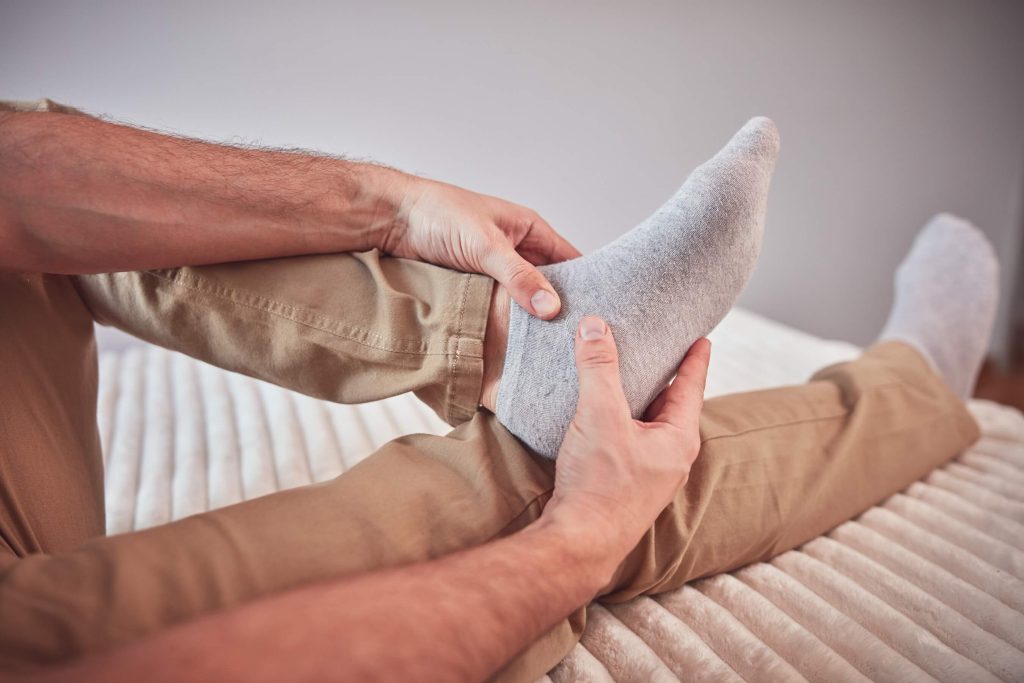
Swelling in the feet, ankles and lower legs is one of the most common signs of vein disease. When the valves in the leg veins stop working properly, blood pools in the lower legs instead of returning to the heart. The added pressure pushes fluid into the surrounding tissue, leaving the legs puffy, tight and uncomfortable — often worse at the end of the day.
Leg swelling can have several causes, so an accurate diagnosis is the first step. When the source is venous, minimally invasive treatment can correct it and bring lasting relief.
Symptoms
Swelling caused by vein disease often comes with other symptoms, including:
Puffy ankles or feet that worsen as the day goes on
Sock or shoe marks that leave an indentation in the skin
A tight, heavy or achy feeling in the lower legs
Swelling that improves overnight or when the legs are raised
Skin discoloration or thickening around the ankles
Varicose veins
What Causes Leg Swelling?
Not all swelling is the same. Edema is general fluid retention, inflammatory swelling follows an injury, and venous swelling is caused by blood pooling in damaged veins. Venous swelling is most often linked to chronic venous insufficiency and venous reflux. Swelling in only one leg — especially with pain, warmth or redness — can signal deep vein thrombosis (DVT) and needs prompt medical attention.
Risk Factors
A family history of vein disease
Age over 50
Pregnancy, hormonal birth control or hormone therapy
Jobs that require standing for long hours
Frequent long flights or car trips
Excess weight, diabetes, smoking or an inactive lifestyle
Treatment
A venous ultrasound shows whether your swelling is coming from the veins. If it is, we treat the damaged veins with minimally invasive, in-office procedures including Radiofrequency Ablation, Laser Ablation, VenaSeal and Varithena, restoring healthy circulation so the swelling can resolve.
Compression socks, elevation and staying active help manage swelling day to day, but they only provide temporary relief — they do not fix the valves that allow blood to pool.